The LEGO Jazz Club (10312) is still worth buying for a modular collector near the September 2026 used estimate of $270. It is harder to justify sealed at about $325. That is already 41 percent above its $229.99 retail price for a building that reviewers liked, but did not rank among the line's best.
Retirement changed the price quickly
BrickEconomy records the Jazz Club as retired in November 2025 after 34 months on sale. As of September 2026, its model valued a new, sealed copy at $325.02, up 41.32 percent from the original $229.99 US price. Typical sealed listings sat between $290 and $330, while the modeled used value was $269.77 with a range of $245.43 to $304.66.
That leaves two different buying decisions. A clean used copy near $270 asks for about $40 over retail, which is manageable for a retired modular. A sealed copy at $325 asks for almost $100 more than retail less than a year after retirement. The latter price is driven as much by completion pressure as by what is inside the box.
BrickEconomy projects slower growth after the early jump, but that is a forecast, not a promise. Its September 2026 model puts annual growth around 11.15 percent over the next two to three years. Buyers should judge the set at today's price rather than paying for a projected one.
What the original $229.99 bought
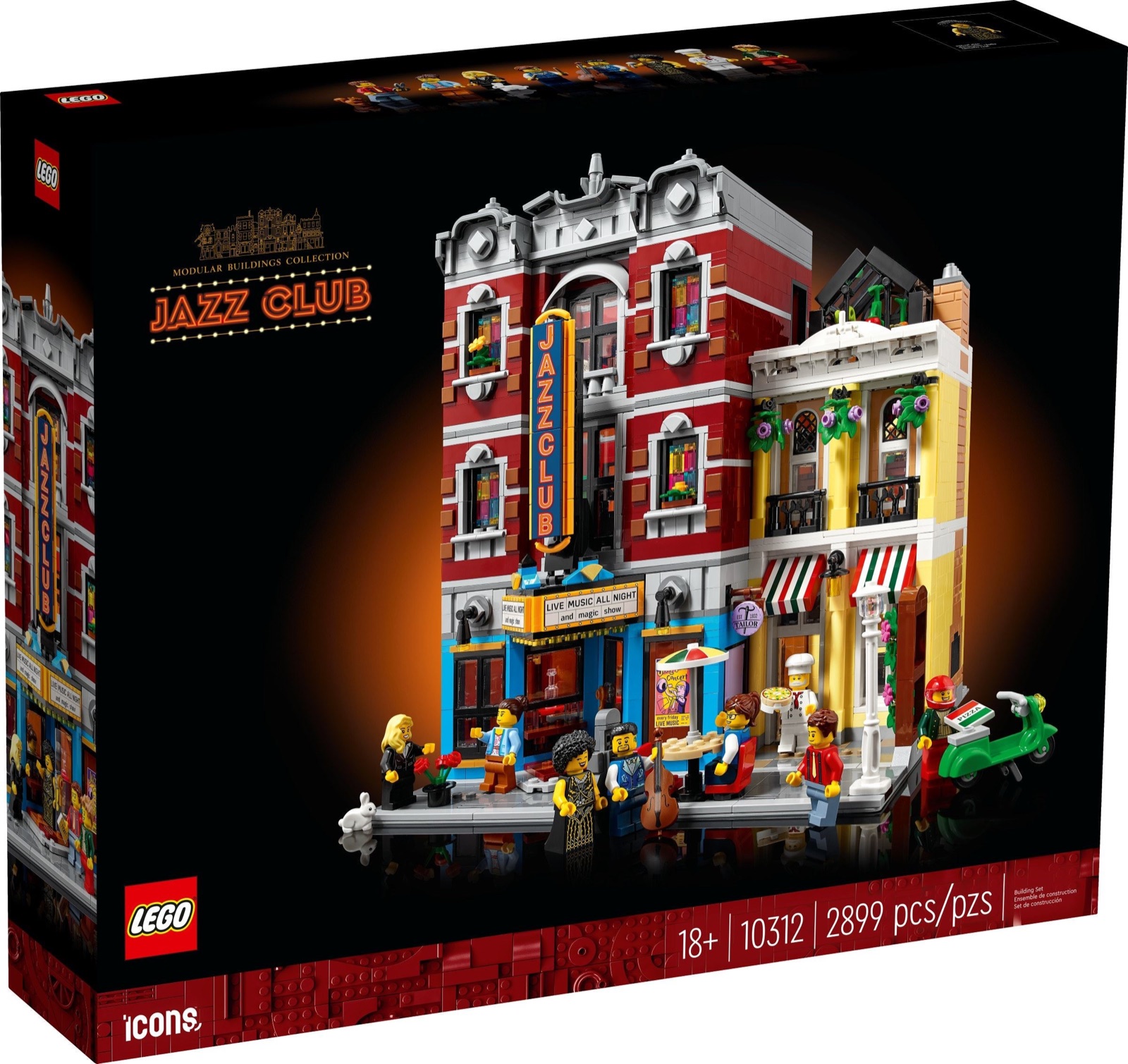
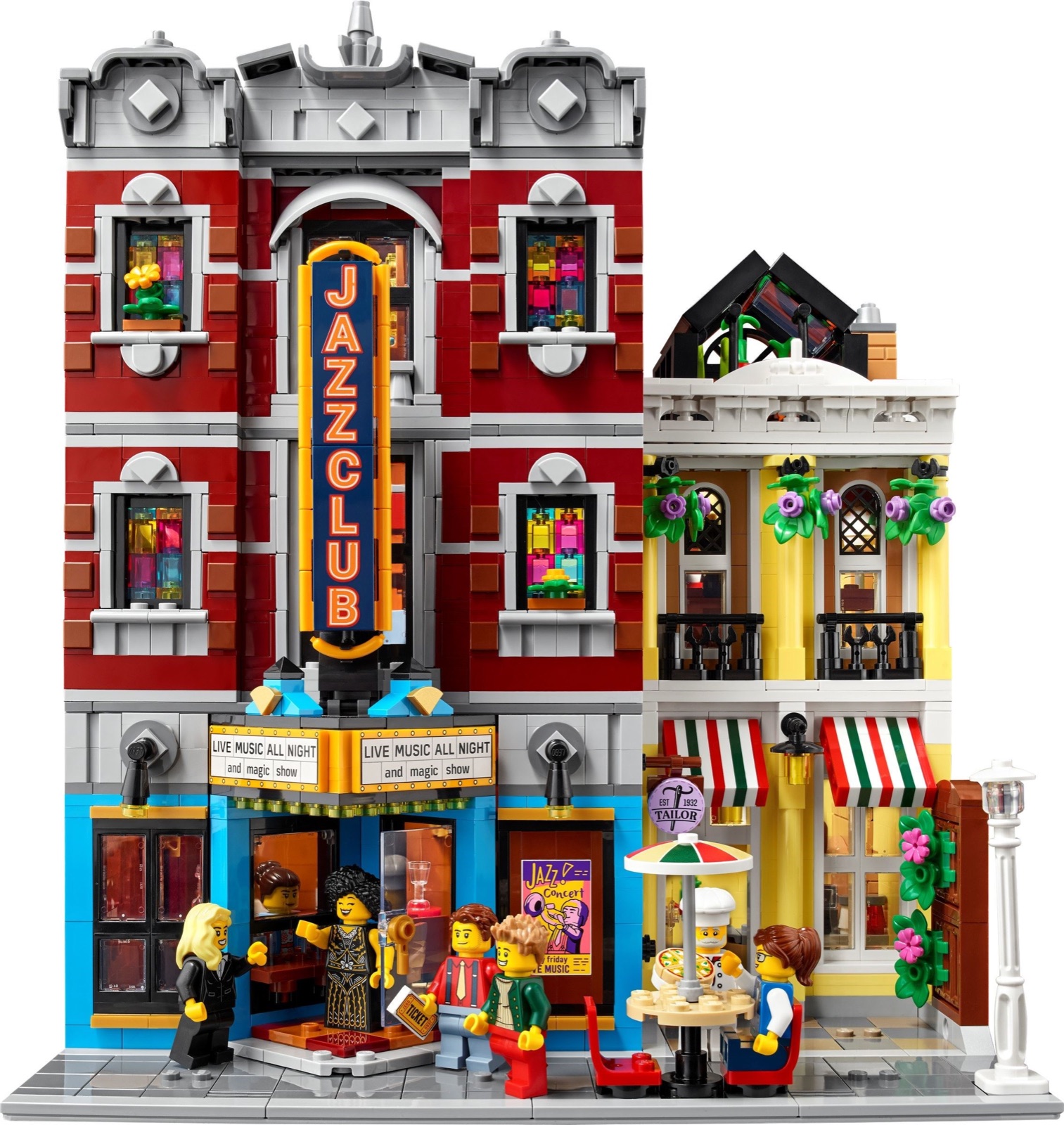
The Jazz Club contains 2,899 pieces, equal to about 7.9 cents per piece at retail. It occupies one standard modular footprint with a three-storey dark-red music venue beside a narrow cool-yellow pizzeria. Inside are the stage, six audience seats, a pizza oven, the club manager's office, a tailor's workshop, a rehearsal and dressing room, and a rooftop greenhouse.
Eight minifigures fill the businesses: a singer, drummer, bassist, club owner, magician, tailor, pizza chef and delivery driver. BrickEconomy lists all eight as exclusive to 10312. That matters after retirement, although its model values the complete group at about $43, so the figures alone do not explain a $95 sealed premium.
Brickset praised the amount packed into the footprint and the new colour combination. It also found the club itself cramped. The stage holds three performers and the room has only six seats, while the angled entrance consumes useful interior space. The set delivers plenty of small scenes, but the title business never feels as expansive as the facade suggests.
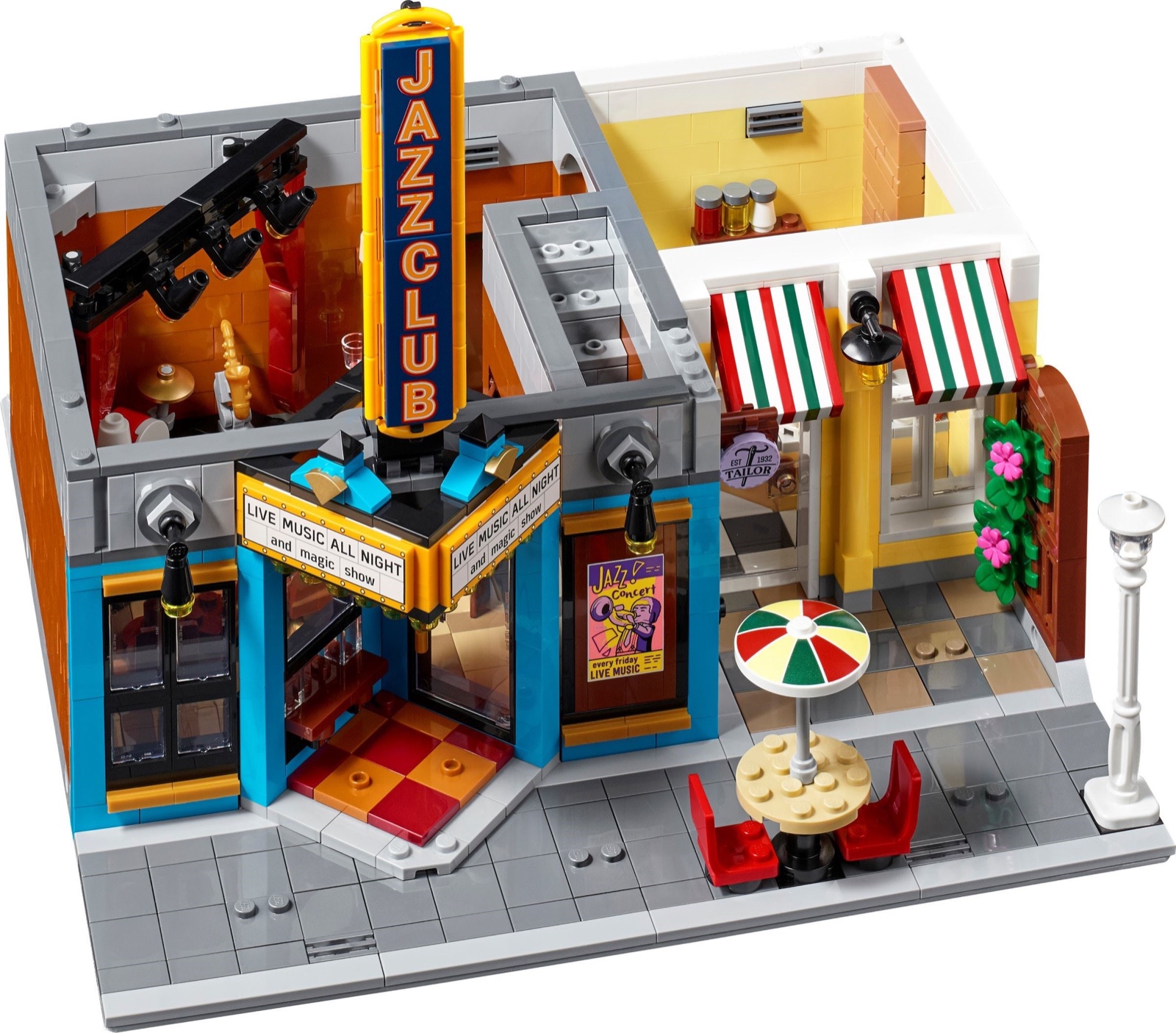
The design is solid rather than essential
The facade does most of the work. Red masonry, cool-yellow walls, stained-glass windows and a tall printed club sign give the building a clear identity. Brickset noted that all decorated elements are printed. The 45-degree entrance and the upside-down construction around the upper facade also provide some technique beyond stacking walls.
The compromises become clearer with each floor removed. Access to the upper rooms runs through a side entrance instead of through the club. The toilet is difficult to see once construction is complete. There is no bar, piano or crowd, and every included figure is working rather than attending the show. Brickset's review called the model competent but said it lacked the visual impact of the Boutique Hotel that preceded it.
That judgment still fits. The Jazz Club is not a weak modular. It is a good street building with a distinctive theme and enough interior detail to reward a slow build. It simply does not become a better design because sealed copies crossed $300.
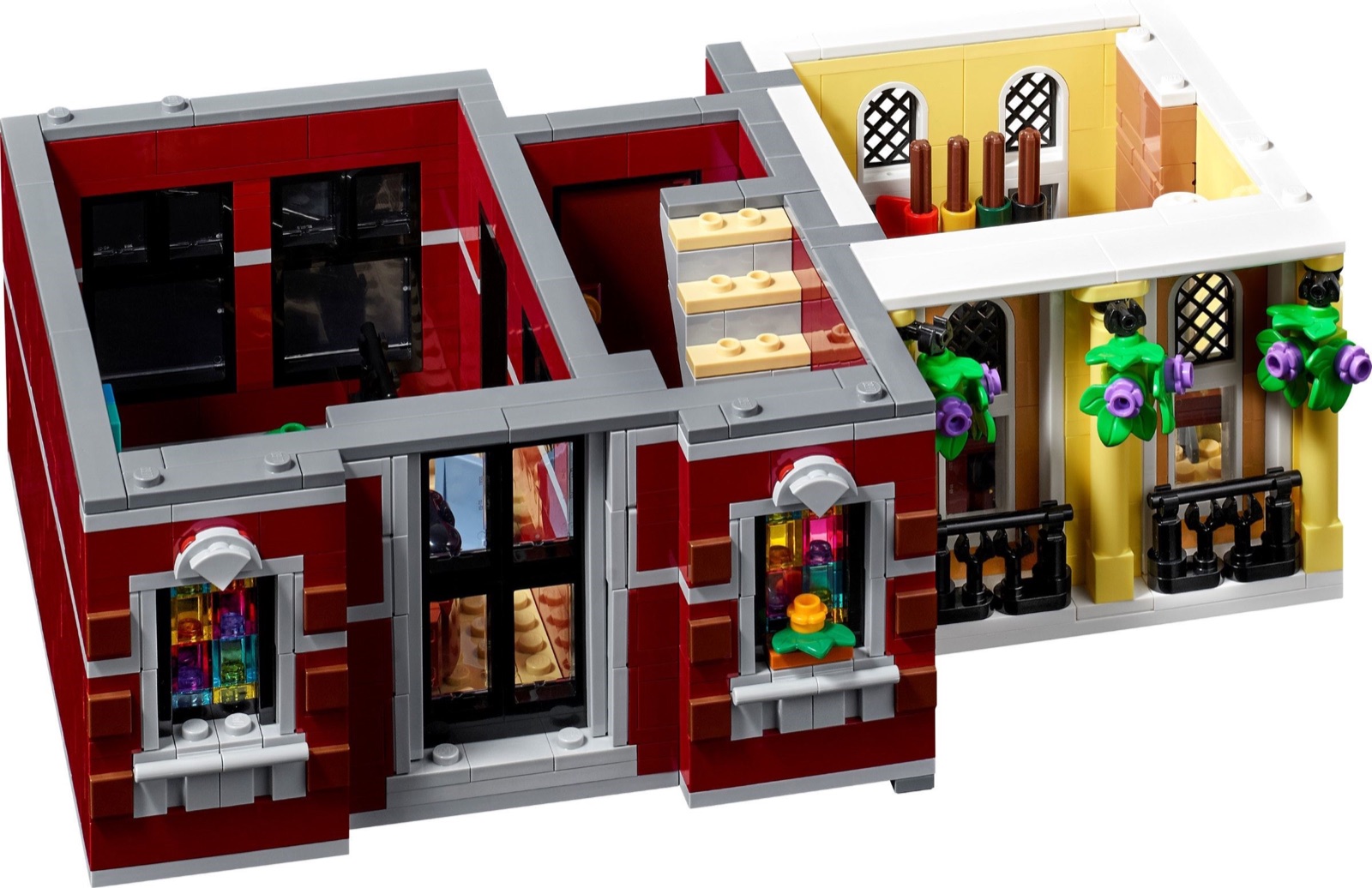
It works best as part of a street
Brickset tested the completed model beside several recent modular buildings and found its straight frontage easy to place. It connected cleanly with the Boutique Hotel, Police Station and Bookshop, even where neighbouring structures had slightly different depths. The pizzeria's yellow facade also acts as a useful break between darker buildings.
That compatibility is the strongest reason to pay a retirement premium. Modular collectors are buying a missing address in a continuous series, not only a standalone jazz venue. Someone starting a display today has more freedom. The current Natural History Museum or another available modular can deliver a larger build without the retired-set surcharge.
The same distinction matters when tracking a collection. Stud Vault can record what a copy is worth, but a rising estimate does not make every entry price sensible. Condition, completeness and whether the box matters to the buyer can move the practical cost by $50 or more here.
The price to target after retirement
A complete used copy between $245 and $275 is the best version of this purchase. That range stays close enough to the original retail price to make the building, exclusive figures and modular compatibility do the work. Confirm that all eight minifigures, the printed signs, the green delivery scooter and the instructions are present before treating a listing as complete.
At $290 to $300 sealed, the decision is defensible for a collector who wants an unopened modular or needs every entry in the line. At BrickEconomy's $325 estimate, it is a completion purchase rather than a value purchase. Casual builders should pass.
The final call is narrow: buy used near $270, or sealed below $300 if box condition matters. Above that, the Jazz Club's early retirement gain benefits the seller more than the next owner.