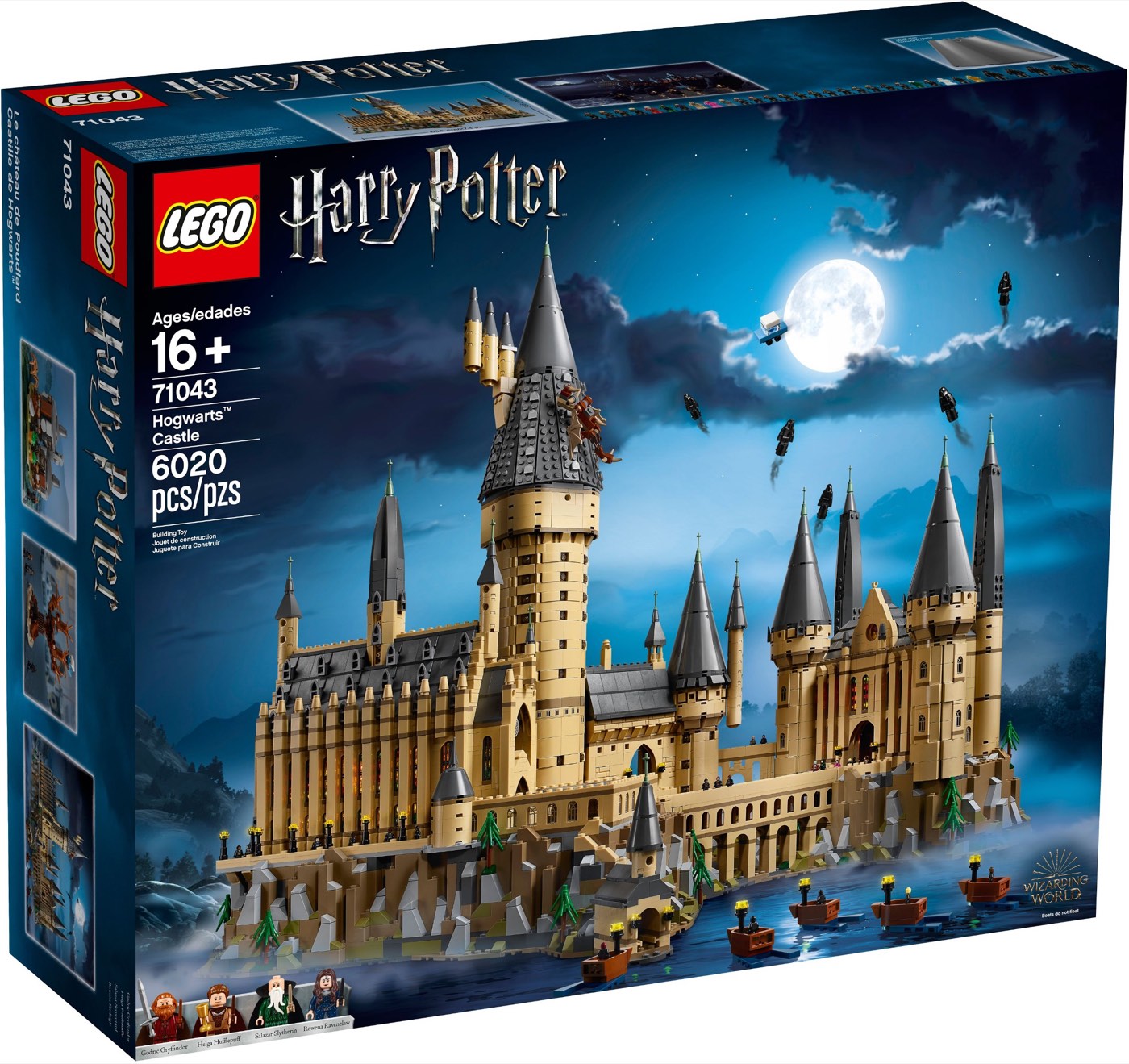
The LEGO Hogwarts Castle (71043) is worth it at a discount and difficult to defend at full price. As of August 2026, Brickset lists it at $469.99 for 6,020 pieces, and Brick Ranker has sealed copies averaging $383.75, roughly 18.4 percent below retail. Eight years on shelves have moved the price up and the market value down.
The price went up, the set did not change
When Brickset reviewed 71043 in 2018 it quoted a price of £349.99 or $399.99 and concluded that figure "seems reasonable." As of August 2026, the Brickset set page lists the recommended retail price as $469.99 and £409.99. That is roughly a 17.5 percent increase on the US price for exactly the same 6,020 pieces.
At $469.99 the rate works out to 7.8 cents per piece, which is still competitive for a licensed set of this size. The problem is not the per-piece maths. It is that you are paying a 2026 price for a 2018 design while the secondary market has quietly decided the set is worth less than that.
What 6,020 pieces actually buys
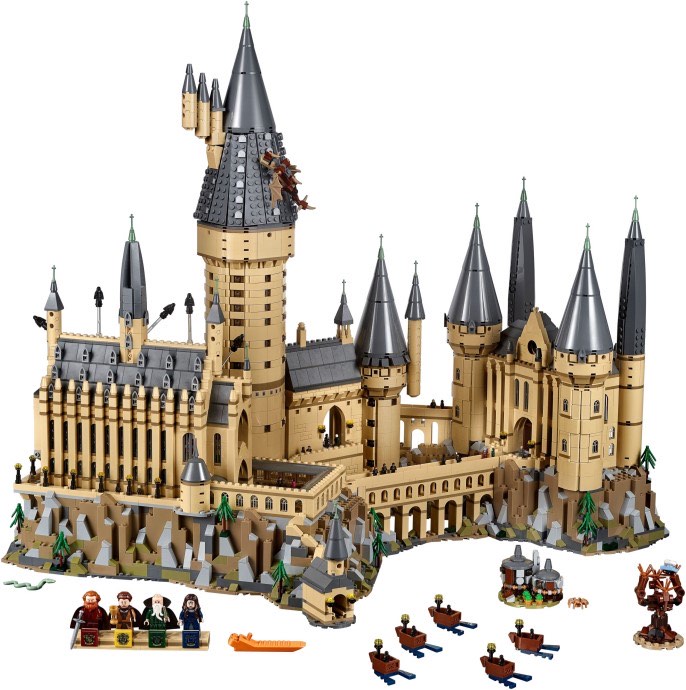
The model measures 58 by 69 by 43 cm, so this is a wide set rather than a tall one. Plan for most of a shelf. It was designed by Joel Baker and Justin Ramsden, carries a 16+ rating, and holds 4.4 out of 5 from 740 Brickset ratings.
Brickset lists 28 figures, all unique to the set. Four are proper minifigures of the Hogwarts founders, Godric Gryffindor, Helga Hufflepuff, Salazar Slytherin and Rowena Ravenclaw, none of whom appear in the films. The rest are the tiny trophy figures that inhabit the castle at its microscale. Brick Ranker values the whole group at $107.45, about 28 percent of the set's worth as of August 2026.
The reviewer also spotted a detail worth knowing: the 6,020 piece count is a deliberate nod to 6020 Magic Shop, one of the first LEGO sets to include a wizard minifigure.
Where the build frustrates
The Brickset review is positive overall but specific about the flaws, and they are the sort that matter more the longer you own the set.
There are 75 stickers, which the reviewer called daunting while conceding most are necessary at this scale. Several land in places you look at often. Dumbledore's office is "heavily reliant upon stickers," the Great Hall's stained glass window stickers "seem rather awkward" beside the brick-built windows next to them, and even the minifigure display stand uses stickers for the four house crests, which the reviewer called "somewhat disappointing."
The Stone Bridge draws the sharpest criticism. It should connect the Lookout Tower to the Viaduct Entrance but instead begins behind the tower, and viewed from behind it "is revealed to lead nowhere." The moving staircases inside the Marble Staircase Tower are mounted on turntables, but the absence of surrounding doorways is flagged as disappointing.
None of that stopped the reviewer recommending it, with a caveat that is still the right filter: this is a set for older Harry Potter fans, and "younger collectors will probably find more enjoyment in the minifigure-scale sets."
The market has been going the wrong way
Brick Ranker's $383.75 valuation draws on 380 recorded sales in the six months to August 2026, and it puts the set 18.4 percent below retail. At that point the set was still in production, still discounted regularly by retailers, and worth less sealed than LEGO charged for it.
That gap is normal for a long-running exclusive rather than a warning sign. Persistent retailer discounting drags the average down for as long as stock exists, and that pressure usually eases after a set leaves shelves. It does mean the practical advice is simple: never pay $469.99. If you are weighing the wider question of when a set earns its price, the guide to whether LEGO sets are worth it covers the same maths across the range. Watching a set's RRP and its market price drift apart over eight years is the kind of thing Stud Vault exists to surface.
When it retires
As of August 2026, Brickset still lists the exit date as to be announced. Brick Ranker's model estimates December 2027, which would give 71043 more than nine years on shelves. That is speculation built on lifespan data, not an announced date, and LEGO does not publish binding retirement dates. Treat it as a reason not to panic-buy rather than a deadline.
Never pay full price for this one
Buy it if you want the definitive Hogwarts at microscale, you have most of a shelf free, and you can find it 20 percent or more off. Retailer discounts on this set are frequent enough that paying RRP is a choice rather than a necessity. It earns a 7 here because the design has aged well and the price has not.
Skip it if you want minifigure-scale play, if stickers bother you, or if you are buying it as an investment. A set that is 18.4 percent below retail after eight years is not a growth story yet, and the aftermarket case only starts once it actually leaves shelves.